

Carbon markets have emerged as powerful tools to accelerate climate action by putting a financial value on greenhouse gas (GHG) emissions reductions. Through regulated or voluntary mechanisms, carbon markets allow companies, governments, and organizations to buy and sell carbon credits, representing one tonne of CO₂ or equivalent emissions avoided or removed.
This market-based approach enables emitters to offset hard-to-abate emissions while incentivizing investments in cleaner technologies, renewable energy, afforestation, and carbon removal solutions.
Compliance and Voluntary Carbon Markets
Both compliance and voluntary carbon markets support emissions reduction:
Compliance Carbon Markets (CCMs)
These mandate legal limits and trading of emission allowances under schemes like Emissions Trading Systems (ETS), compelling firms to meet prescribed targets.
Voluntary Carbon Markets (VCMs)
These allow companies and projects to generate and trade carbon credits to offset emissions beyond regulatory requirements, driven by sustainability and net-zero goals.
As regulations tighten, sectors such as energy, industry, aviation, and agriculture are increasingly participating in both markets to meet climate commitments.
India’s Carbon Market Landscape
India’s evolving carbon market includes domestic compliance frameworks alongside a strong voluntary carbon credit ecosystem. This reflects global trends toward pricing carbon and rewarding mitigation efforts.
Examples in India
- Mumbai Metro achieved carbon-neutral status through certified offsets under an internationally accepted standard.
- Arunachal Pradesh Small Hydro Project secured carbon credits from verified emission reductions.
- UP–IIT Roorkee Carbon Credit Model empowers farmers to earn income through sustainable agricultural practices.
Future Outlook
As countries adopt net-zero targets and climate finance accelerates, carbon markets are expected to grow significantly. Innovative approaches such as direct air capture, biochar, blue carbon, and regenerative agriculture are strengthening the credibility and impact of carbon projects.
DRIIV’s Role in Climate Action
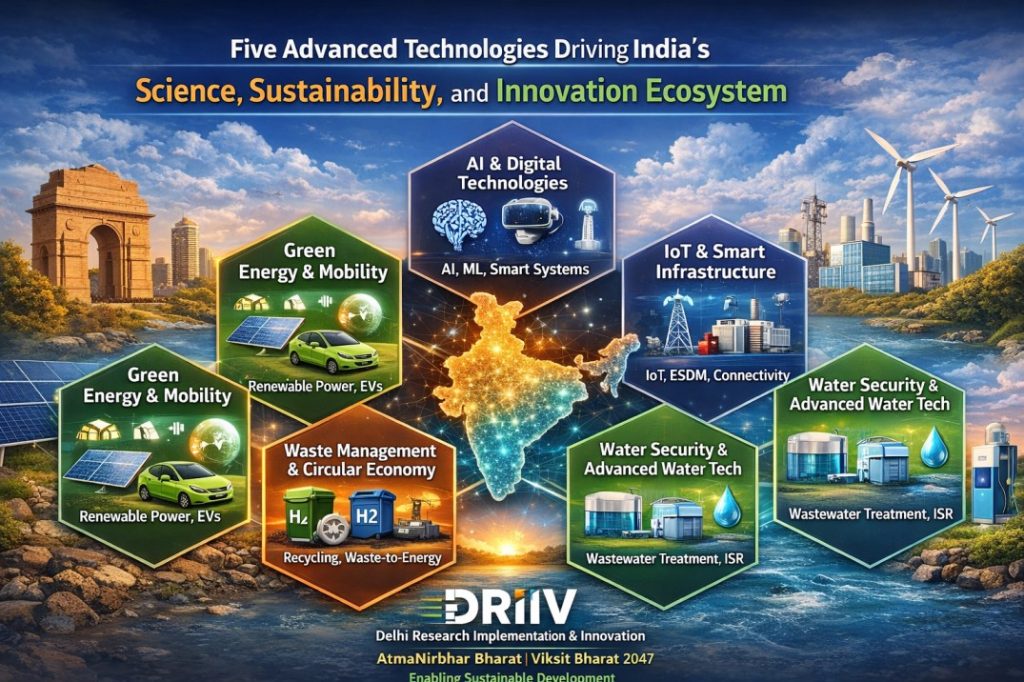
Within India’s sustainability ecosystem, DRIIV (Delhi Research Implementation and Innovation) contributes to climate and environmental objectives through initiatives in clean energy transition, environmental sustainability, and water security. These efforts create pathways aligned with decarbonization and future carbon market readiness.
FAQs
What is a carbon market?
A system where carbon credits are traded to offset greenhouse gas emissions.
What is a carbon credit?
A tradable certificate representing one tonne of CO₂ reduced or removed.
What are compliance carbon markets?
Legally regulated systems such as emissions trading schemes.
What are voluntary carbon markets?
Markets where organizations offset emissions without legal mandates.
How does DRIIV support climate action?
DRIIV enables clean energy and environmental pilots aligned with decarbonization goals.