
Water is the essence of life, and for a country like India, where rapid industrialization and population growth put immense pressure on natural resources, ensuring water security is crucial. One of the biggest challenges India faces today is managing and treating wastewater to maintain clean water sources and support sustainable water management practices. At DRIIV, we are committed to promoting advanced Wastewater Treatment Technologies that contribute to the control of water pollution and enhance water conservation efforts across the nation.
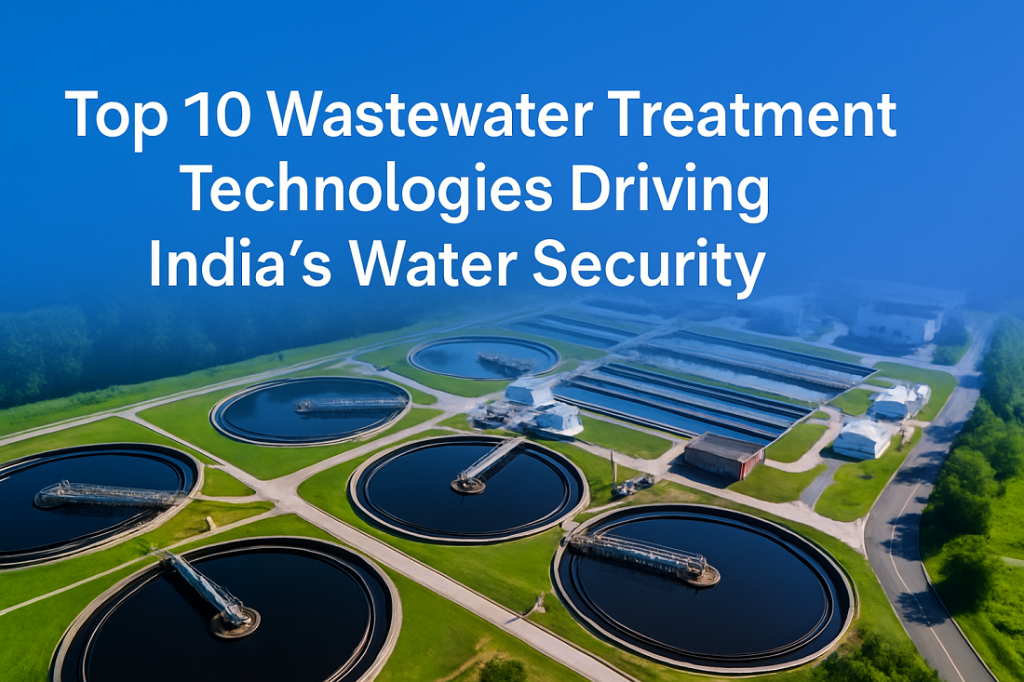
In this blog, we explore the top 10 wastewater treatment technologies that are shaping India’s path toward robust water security in India and sustainable development.
Why Wastewater Treatment is Critical for Water Security in India
India’s water demand is skyrocketing, but the availability of clean freshwater is limited and unevenly distributed. Untreated or poorly treated wastewater pollutes rivers, lakes, and groundwater, threatening public health and ecosystems. Effective wastewater treatment not only cleans water but also helps recycle and reuse water, thus reducing the burden on freshwater sources.
By adopting innovative wastewater treatment technologies, India can tackle the challenges of water scarcity and pollution, fostering sustainable water management and contributing to the country’s overall water security.
Top 10 Wastewater Treatment Technologies Driving India’s Water Security
1. Activated Sludge Process (ASP)
The Activated Sludge Process is a widely used biological treatment technology where air is pumped into wastewater to promote the growth of microorganisms that consume organic pollutants. This process is highly efficient in reducing biochemical oxygen demand (BOD) and suspended solids, making it an essential tool for municipal and industrial wastewater treatment.
2. Membrane Bioreactors (MBR)
MBR technology combines conventional biological treatment with membrane filtration. It offers superior treatment quality by filtering out solids and microorganisms after the biological process. MBR systems produce high-quality effluent suitable for reuse, supporting water conservation initiatives.
3. Phycoremediation
Phycoremediation is an emerging and eco-friendly technology using algae to treat wastewater. Algae absorb nutrients and heavy metals, helping reduce pollution levels. This technology not only cleans wastewater but also produces biomass that can be used as biofuel or fertilizer, promoting circular economy principles.
4. Constructed Wetlands
Constructed wetlands mimic natural wetlands to treat wastewater through physical, chemical, and biological processes. They are cost-effective and environmentally sustainable, providing habitat for wildlife and aiding groundwater recharge while treating sewage and industrial effluents.
5. Reverse Osmosis (RO)
Reverse Osmosis is a membrane-based filtration process that removes dissolved salts, organic matter, and microorganisms from wastewater. RO is extensively used for producing high-purity water in industries and can be applied in wastewater reuse programs to boost water security in India.
6. Advanced Oxidation Processes (AOPs)
AOPs use powerful oxidizing agents such as ozone, hydrogen peroxide, or UV light to break down complex organic pollutants in wastewater. This technology is especially useful for treating industrial effluents containing toxic and non-biodegradable substances.
7. Anaerobic Digestion
Anaerobic digestion treats wastewater by breaking down organic matter in the absence of oxygen, producing biogas that can be used for energy. This technology is widely used in sewage treatment plants and industrial wastewater facilities, contributing to energy recovery and reducing greenhouse gas emissions.
8. Electrocoagulation
Electrocoagulation uses electrical current to remove contaminants such as heavy metals, suspended solids, and pathogens from wastewater. This innovative technology is gaining popularity for its efficiency, low chemical use, and ability to handle various wastewater types.
9. Trickling Filters
Trickling filters involve wastewater being sprayed over a bed of media (such as rocks or plastic) covered with microorganisms that digest organic pollutants. This biological treatment is cost-effective and widely used for small to medium-scale wastewater treatment systems.
10. Sedimentation Tanks
Sedimentation is a primary treatment process where heavy solids settle at the bottom of tanks, allowing clearer water to flow out. Though simple, sedimentation is an important initial step in many wastewater treatment plants, helping reduce solids load before further treatment.
How These Technologies Support Sustainable Water Management in India
Implementing these advanced Wastewater Treatment Technologies is critical to achieving water security and ensuring sustainable water management in India. They help:
Reduce Pollution: By effectively treating wastewater before it reaches natural water bodies, these technologies help in the control of water pollution.
Promote Water Conservation: Treated wastewater can be reused for agriculture, industrial processes, and even drinking water after further treatment, thereby conserving precious freshwater resources.
Enhance Public Health: Proper wastewater treatment prevents waterborne diseases by ensuring clean and safe water supplies.
Support Circular Economy: Technologies like phycoremediation and anaerobic digestion transform waste into valuable resources, aligning with sustainable development goals.
Challenges and the Way Forward
Despite the availability of these technologies, India faces challenges in wastewater management including:
- Infrastructure gaps in rural and urban areas.
- High operational and maintenance costs.
- Lack of awareness and trained personnel.
- Regulatory and enforcement hurdles.
At DRIIV, we believe that integrating policy reforms, technological innovation, public awareness, and investment in infrastructure is key to overcoming these challenges. Government and private sector collaboration will accelerate adoption of these wastewater treatment technologies, paving the way for a water-secure India.
Why Choose DRIIV for Sustainable Water Solutions?
At DRIIV, we specialize in promoting and implementing cutting-edge Wastewater Treatment Technologies that ensure water security in India. Our focus is on:
- Providing customized solutions for industrial, municipal, and agricultural wastewater.
- Ensuring sustainable and eco-friendly treatment processes.
- Supporting India’s journey toward Viksit Bharat through innovation in sustainable water management.
Partner with DRIIV to drive impactful water conservation and pollution control initiatives with the latest technologies.
Frequently Asked Questions (FAQs)
Q1. What is the importance of wastewater treatment in ensuring water security in India?
Wastewater treatment removes harmful contaminants from used water, making it safe for reuse or discharge. This reduces pollution, conserves freshwater resources, and supports sustainable water availability, which is critical for India’s growing population and economy.
Q2. How does phycoremediation help in wastewater treatment?
Phycoremediation uses algae to absorb nutrients and pollutants from wastewater. It is a natural, eco-friendly method that also produces biomass for biofuels or fertilizers, contributing to both pollution control and resource recovery.
Q3. Can treated wastewater be reused for drinking purposes?
Yes, treated wastewater that undergoes advanced treatment processes like membrane filtration and disinfection can be made safe for drinking. However, strict quality checks and standards must be followed to ensure public health safety.
Q4. What are the benefits of using membrane bioreactors in wastewater treatment?
Membrane bioreactors offer superior effluent quality by combining biological degradation with membrane filtration. They save space, reduce sludge production, and enable water reuse, making them ideal for urban and industrial applications.
Q5. How does wastewater treatment contribute to sustainable water management?
Wastewater treatment enables water recycling and reuse, reduces pollution of natural water bodies, and supports ecosystem health. These factors collectively promote sustainable water management by ensuring long-term availability and quality of water resources.
India’s journey toward achieving reliable water security depends heavily on embracing advanced Wastewater Treatment Technologies and fostering an ethos of water conservation. With the right technologies and strategic initiatives, India can secure a sustainable water future for its citizens and environment.
For more information on how DRIIV can assist you in implementing these technologies for better water management, feel free to contact us.